
Loading...
Serving Daly City, CA and surrounding areas. (415) 306-5709
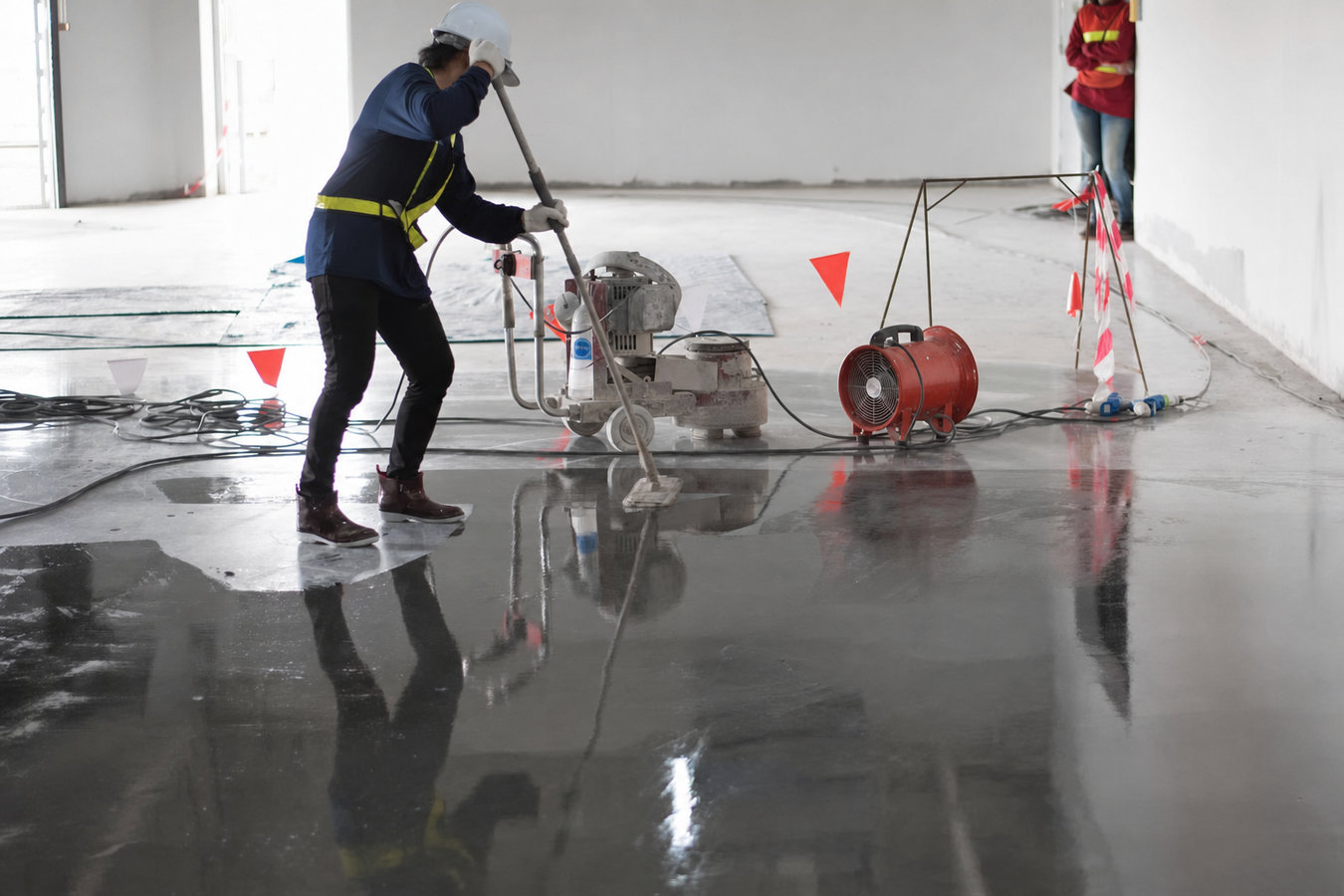
Dips, slopes, and uneven settled slabs cause problems for every floor covering you put on top. We level floors in Daly City - moisture-tested, crack-assessed, and poured to stay flat in coastal Bay Area conditions.
Self-leveling concrete in Daly City is a specially mixed material that flows across an uneven floor and settles into a flat, smooth surface on its own, most single-room jobs are poured in one day and ready for careful foot traffic within 24 hours. It is used to fix floors that have dipped, cracked, or become uneven over time - either before new flooring goes down or as a finished decorative surface. The material flows like thick pancake batter and finds its own level, which is exactly what the name describes.
In Daly City, where many homes date back to the 1940s and 1960s and sit on soils that expand and contract with the seasons, uneven floors are a common maintenance issue rather than a rare problem. Decades of gradual soil movement and occasional minor seismic activity leave slabs with dips and low spots that cause tile grout to crack, hardwood to squeak, and furniture to sit unevenly. Self-leveling concrete addresses the cause of those symptoms rather than just the surface.
For surfaces where the concrete is worn or damaged rather than just uneven, a concrete resurfacing and overlay is often the better approach - or the two are combined, leveling first and finishing second.
If furniture rocks slightly, water pools in one spot after mopping, or you can feel a subtle slope underfoot, your slab has likely settled unevenly. This is especially common in Daly City's older Westlake-area homes, where decades of soil movement beneath the slab have caused gradual shifting. A self-leveling pour is often the most straightforward fix for exactly this situation.
Tile, luxury vinyl plank, and hardwood all require a truly flat surface to install and perform correctly. If your installer has flagged the floor as uneven, or you can see bumps and ridges in the existing surface, self-leveling concrete is the standard solution before new flooring goes down. Skipping this step leads to cracked grout, squeaky planks, and flooring that wears unevenly.
Small surface cracks are common in older Bay Area homes, but cracks that have visibly grown or that you can feel with your foot are a sign the slab has moved. Given Daly City's proximity to the San Andreas Fault and its clay-heavy soils, this kind of movement is not unusual. A contractor can assess whether the cracking is stable enough for an overlay or needs further prep first.
When old vinyl, tile, or carpet is removed, the concrete underneath often looks rough, stained, or pitted from old adhesive. An overlay can smooth and refresh that surface without the cost of tearing out and replacing the whole slab. If the surface looks more like a construction site than a floor, an overlay is likely the right call.
Every job starts with a moisture test - this is not optional in Daly City. Coastal climates and older slabs without proper vapor barriers mean moisture migrating up through the concrete is a real risk here, and a self-leveling pour over an untreated moisture problem will bubble and fail. If moisture is present, a barrier coat goes down first. After that, we grind down high spots, patch cracks, and apply a bonding primer before the pour, because the bond between the new material and the old slab is what determines how long the floor stays flat.
The pour itself is the fast part - a typical room is completed in a few hours and the material self-levels into corners and edges as it flows. For homeowners who want a finished decorative surface rather than a base for new flooring, we can apply a decorative overlay or pool deck coating on top once the leveling compound has cured. We also work alongside new flooring installations where the contractor needs the floor leveled before they can begin. California products used for indoor floor coatings must meet the state Air Resources Board standards for VOC limits - we use compliant materials on every job.
Best for homeowners preparing an uneven floor for tile, hardwood, or vinyl plank - creates a flat base the flooring installer needs to do the job right.
Best for rooms where a smooth, finished concrete surface is the goal - polished, stained, or sealed as a standalone floor rather than a base for other materials.
Best for older Daly City homes or any slab where moisture testing shows vapor migration - the barrier goes down first to protect the bond from below.
Best when the floor has both active surface cracks and uneven settling - the cracks are addressed and stabilized before the leveling compound is poured.
A large share of Daly City's homes were built between the 1940s and 1960s - the Doelger-built row homes in Westlake and similar neighborhoods across the city. Slabs in homes this age have had decades to settle, and much of the San Francisco Peninsula sits on soils that expand when wet and shrink when dry. That seasonal movement puts stress on concrete from below, which is why floors in this area develop dips and low spots more often than in stable inland soils. Self-leveling concrete is designed exactly for this problem, and we see it frequently in homes across Daly City. We serve homeowners throughout the area including San Francisco and South San Francisco, where the same combination of older housing stock and coastal climate produces the same floor leveling needs.
Daly City's coastal fog is the other major factor. High ambient humidity slows curing and raises the risk of moisture vapor coming up through the slab - something we test for on every job before a single drop of material is poured. The city also sits near the San Andreas Fault, meaning slabs here may have absorbed years of minor seismic movement that shows up as cracks or shifted sections. Before any pour, we assess whether those cracks are stable or still active - because pouring over a moving crack without addressing it first means the crack will reappear through the new surface. Being close to the fault is a reason to be thorough, not a reason to avoid the work.
The California Contractors State License Board provides free license verification for any contractor you are considering - a check that takes under a minute and is worth doing before you sign anything. California's Air Resources Board sets strict VOC limits for indoor flooring products, which is why compliant materials matter for any project inside your home.
Reach out by phone or our contact form and we respond within one business day. We will ask about the room size, what is currently on the floor, and what you plan to put down afterward. Most Bay Area contractors offer free on-site estimates - do not commit to pricing over the phone.
We come out, measure the floor, check how uneven it is, and test for moisture. In Daly City, moisture testing is especially important given the coastal climate and older slab construction. You get a written estimate after this visit, not before.
On the job day, we grind down any high spots, fill cracks, and apply a bonding primer. This prep step is what makes the new material adhere correctly and stay flat long-term - it is not a shortcut we skip to save time.
The self-leveling material is poured and flows into place. Most rooms take a few hours to pour. The floor needs 24 hours before light foot traffic and up to a week before new flooring installs in Daly City conditions. We give you a clear timeline before we leave.
We test for moisture and assess your slab in person before recommending anything - no pressure, no obligation.
(415) 306-5709We do not skip moisture testing in a coastal climate - it is the step that protects the entire pour. If vapor is present and not addressed, the self-leveling material will not bond correctly. Finding it before the pour and adding a barrier coat is far less expensive than redoing the job after it fails.
Daly City sits near the San Andreas Fault, and slabs here have often absorbed years of minor movement. We evaluate every crack before pouring - if a crack is still active, we address it first. Pouring over a moving crack without stabilizing it means the crack reappears through the new surface, and that is a job that needs to be redone.
Our license is current and verifiable at cslb.ca.gov. California requires a valid license for this work above a low dollar threshold, and that requirement exists to protect homeowners. If a contractor doing this work cannot show you a current California license, that is a reason to look elsewhere.
We work regularly on mid-century homes throughout Daly City and the surrounding Peninsula communities. That means we know what to expect from slabs built in the 1940s through 1960s - the surface conditions, the typical moisture patterns, and what prep work those older slabs need before a leveling pour will hold.
The goal is a floor that passes a straightedge test - flat, bonded, and ready for whatever goes on top. Every step we take from moisture testing to final cure is aimed at that result, not just at finishing the job quickly.
Outdoor surfaces near water need anti-slip coatings and materials rated for constant moisture exposure - a specialized application beyond standard floor leveling.
Learn MoreWhen a floor or outdoor slab is worn and visually tired rather than just uneven, resurfacing applies a fresh bonded layer on top of the existing concrete.
Learn MoreCall now or request a free estimate - we schedule on-site assessments quickly and respond within one business day.